Medical Conferences and Surgical Teaching Livestreams: Image Quality, Access Control, and Compliance
A practical guide for hospitals, societies, and medical educators: how to capture surgical teaching signals, protect image quality and color, tier viewer access, and handle patient privacy, informed consent, and prescription-product content in livestreams.
TL;DR: key takeaways
- Surgical teaching is driven by OR and device video (endoscope, microscope, ultrasound)—usually via SDI/HDMI capture—not by pointing a camera at a monitor.
- Medical audiences need clarity and faithful color; leave more bitrate than a normal meeting, and mic the commentary separately.
- Access control is core: tier by public / verified clinicians / named in-hospital staff, plus identity checks, allowlists, watermarks, and limited replay windows.
- Health data is sensitive personal information; obtain informed consent and de-identify the frame before teaching. Prescription-drug related content should stay limited to medical/pharmacy professionals.
Academic congresses, case conferences, surgical teaching, and CME courses are driving more medical livestream demand. Unlike a typical enterprise broadcast, the picture may include real patient information, the audience may mix clinicians and the public, and the content often touches drugs and devices. Medical livestreams therefore have to clear three bars at once: image quality, access control, and compliance.
The hard part of medical livestreaming is not the push itself—it is being able to see clearly, deciding who may watch, and deciding what is allowed on air.
1. Signal capture: where surgical teaching video comes from
Surgical teaching usually combines three picture types. Confirm interfaces with the OR and biomedical engineering early:
- Device video: endoscope, microscope, ultrasound, DSA, and similar outputs—typically SDI or HDMI. Capture cards or encoders beat filming a monitor (no glare, no moiré).
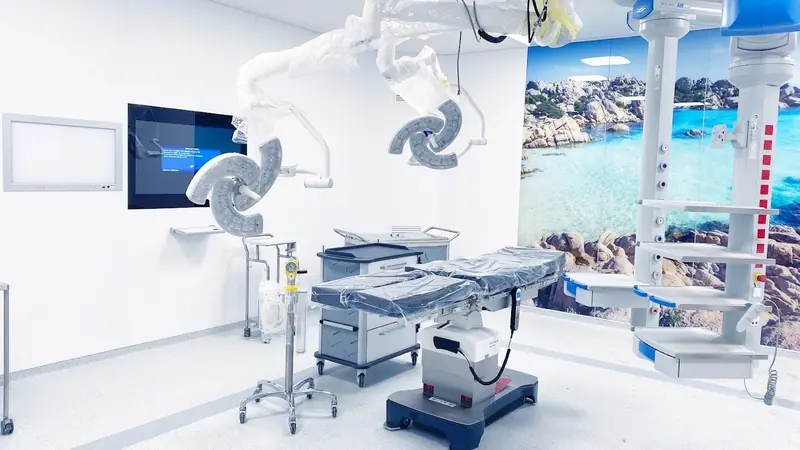
- Field and room: OR-light or fixed cameras for the surgical field, plus a wide shot for team workflow and the instrument table.
- Commentary: surgeon or moderator camera, plus slides and imaging materials.
After multi-source ingest into a switcher or software director, picture-in-picture (device primary, field secondary) works well. ORs have sterility and traffic rules—place gear and cable runs in advance; do not improvise on the day.

2. Image quality and audio: medical frames must read clearly
Clinicians care about tissue planes, vessel paths, and instrument detail. Clarity and color fidelity matter more than in a normal meeting:
- Resolution follows the source: if the device outputs 1080p, push 1080p; leave bitrate near the top of that tier so motion does not dissolve into blocks.
- Color and exposure: OR lights blow highlights easily. Lock exposure and white balance on the field camera; test with a real surgical setup before go-live.
- Separate mics: monitors and suction add noise. Wireless lavaliers or headsets for the surgeon and commentator, mixed apart from ambient.
- Dual-path backup: for high-stakes teaching, run primary/backup networks and encoders, and record locally end-to-end for recovery and later VOD editing.
3. Access tiers: who can watch, and for how long
Medical events often share one program with different audiences. Tier by sensitivity:
| Tier | Typical content | Common controls |
|---|---|---|
| Public | Academic talks, health education | Open link; optional registration |
| Professionals | Case discussion, surgical teaching, drug/device segments | Real-name registration + license/org verification or institutional allowlist |
| Named staff | In-hospital consults, internal training | Hospital SSO, IP or org allowlist |
On top of that: viewer-info watermarks to deter leaked recordings; time-limited replay with download off; encrypted VOD playback; and retained view logs for CME credits and audit.
4. Compliance: privacy, consent, and promotional content
Patient privacy and informed consent. Under China’s Personal Information Protection Law, health information is sensitive personal information and generally requires separate consent. For livestream teaching, at minimum:
- Obtain informed consent before teaching—scope of broadcast, who may watch, and whether replay is kept;
- De-identify the frame: blank or mask names, MRNs, and bed numbers on monitors, imaging UIs, and charts;
- Keep faces out of frame by default; store recordings under hospital data rules with limited access.
Drug and device related content. Many meetings involve industry support and product segments. China’s Advertising Law restricts ads for certain special-control drugs, limits other prescription-drug ads to designated medical/pharmacy publications, and bans efficacy claims and cure-rate statements in medical/drug/device ads. Opening such segments to the general public is high risk. Safer practice: gate product segments to verified professionals, pre-review speaker content, and let hospital or company legal/compliance set the boundary.
Data and systems. If the stream touches the hospital network or pulls from internal systems, clear cybersecurity and data rules with IT first—and consider on-prem options when required.
Closing
The media pipeline for medical livestreams is not exotic. The difficulty is in the details: capture device signals directly, protect picture and audio on their own paths, authorize viewers in tiers, and review privacy and promotional content before air. Put those items on every event checklist so conferences and surgical teaching can travel widely without crossing professional or compliance lines.
Frequently asked questions
Does surgical teaching always need 4K?
Not necessarily. Match the source. If the endoscope or microscope outputs 1080p, upscaling to 4K adds little. Consider 4K only when the device, network, and viewer screens can sustain it. Stable 1080p with enough bitrate usually beats fragile 4K.
Can a medical conference livestream be fully public?
Academic talks and public education can be open. Segments with real cases, surgical video, or prescription-product content should stay limited to identity-verified clinicians, with replay download restricted or disabled.
How should patient information be handled on camera?
Audit every source before go-live: monitors, PACS UIs, and chart screens may show names or MRNs—blank, crop, or blur them. Avoid patient faces; if a face must appear, obtain explicit consent.
What if Q&A latency is too high during a case?
Keep HLS/FLV (or similar) for the large audience; use a WebRTC-style low-latency path for guest interaction. Many events run both in the same session.
Sources
Related reading

Where Does Live Streaming Latency Come From? RTMP, HLS, LL-HLS, and WebRTC Low-Latency Options Explained
A stage-by-stage breakdown of live streaming latency—capture, encoding, ingest, transcoding, delivery, and playback—with a comparison of typical latency and use cases for RTMP, HLS, LL-HLS, WebRTC, and SRT, plus a practical checklist for reducing delay.

How to Configure OBS for Streaming: Bitrate, Resolution, Keyframe Interval, and Encoder Choice
An OBS streaming settings guide for enterprise and course livestreams: how to set bitrate from your upload bandwidth, how to balance resolution and frame rate, why a 2-second keyframe interval is recommended, how to choose between x264 and hardware encoders (NVENC, QuickSync, AMF, Apple VT), and a pre-broadcast checklist.

How to Encrypt Video on Demand: A Practical Guide to HLS AES-128, DRM, Hotlink Protection, and Watermarking
A systematic look at the four layers of VOD content protection—transport and storage security, HLS AES-128 and SAMPLE-AES, commercial DRM, and URL authentication, hotlink protection, and digital watermarking—with recommended combinations for different businesses.